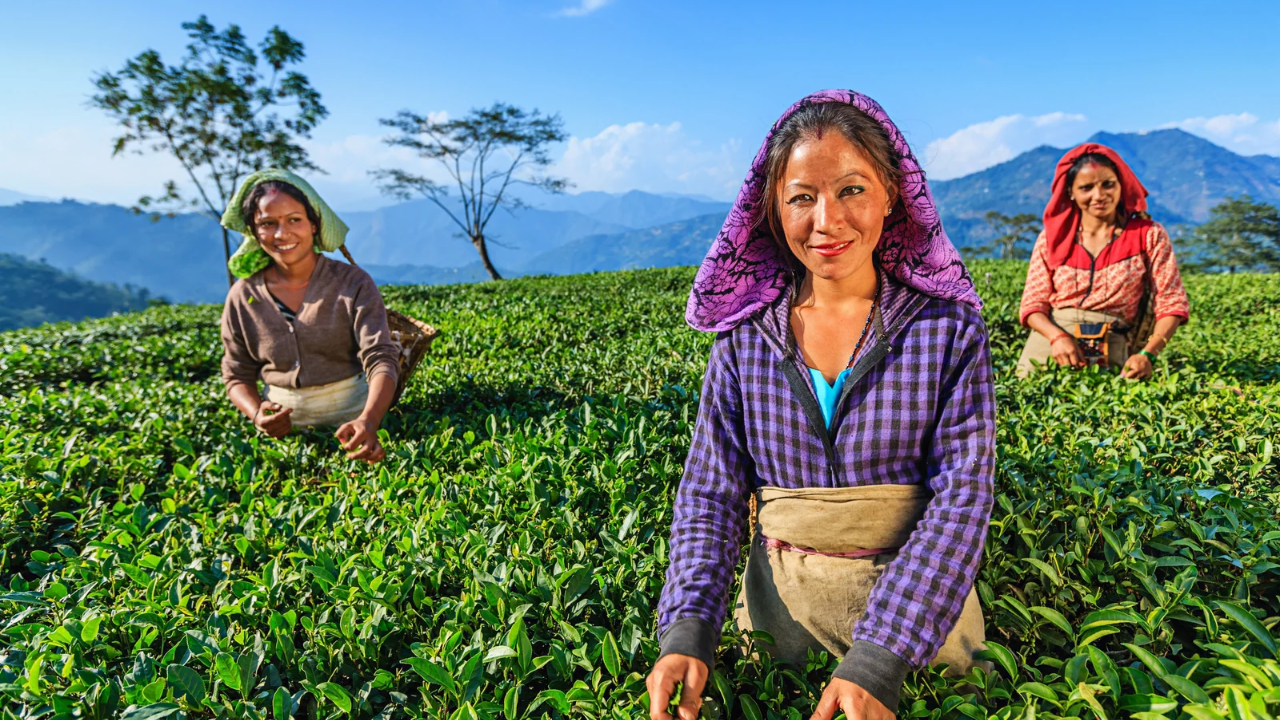
Darjeeling sits at the northern tip of West Bengal, at an altitude of more than 2,000 m, and has grown from a colonial hill station into one of eastern India's most loved mountain getaways. A former Gorkha station, the town was ceded to the British in 1835 by the Raja of Sikkim. Today it is known for its colonial charm, cool climate and wide mountain views.
Darjeeling is famous worldwide for its tea. Estates cover the surrounding hillsides, and visitors can walk through the plantations, watch how the leaves are processed and taste a freshly brewed cup. The town is also the home of the Darjeeling Himalayan Railway, the "Toy Train", a UNESCO World Heritage Site. Its narrow two-foot track runs 88 km and passes through Ghoom, which at 2,200 m is the highest railway station in India. The other must-see is Tiger Hill. Most visitors get up at 4 am to travel there, hoping the mist clears to show Kangchenjunga, the world's third-highest peak, in the dawn light.
Beyond the views, Darjeeling has a lively mix of Nepali, Tibetan, Lepcha and Bhutia communities, along with old monasteries, bustling markets and heritage buildings. Other highlights include Ghoom Monastery, Batasia Loop, the Himalayan Mountaineering Institute and the Padmaja Naidu Himalayan Zoological Park.
With its tea gardens, mountain views, colonial heritage and relaxed pace, Darjeeling suits couples, families, photographers, tea lovers and first-time visitors to the Eastern Himalayas. It is under four hours by road from Gangtok, so the two destinations combine easily.