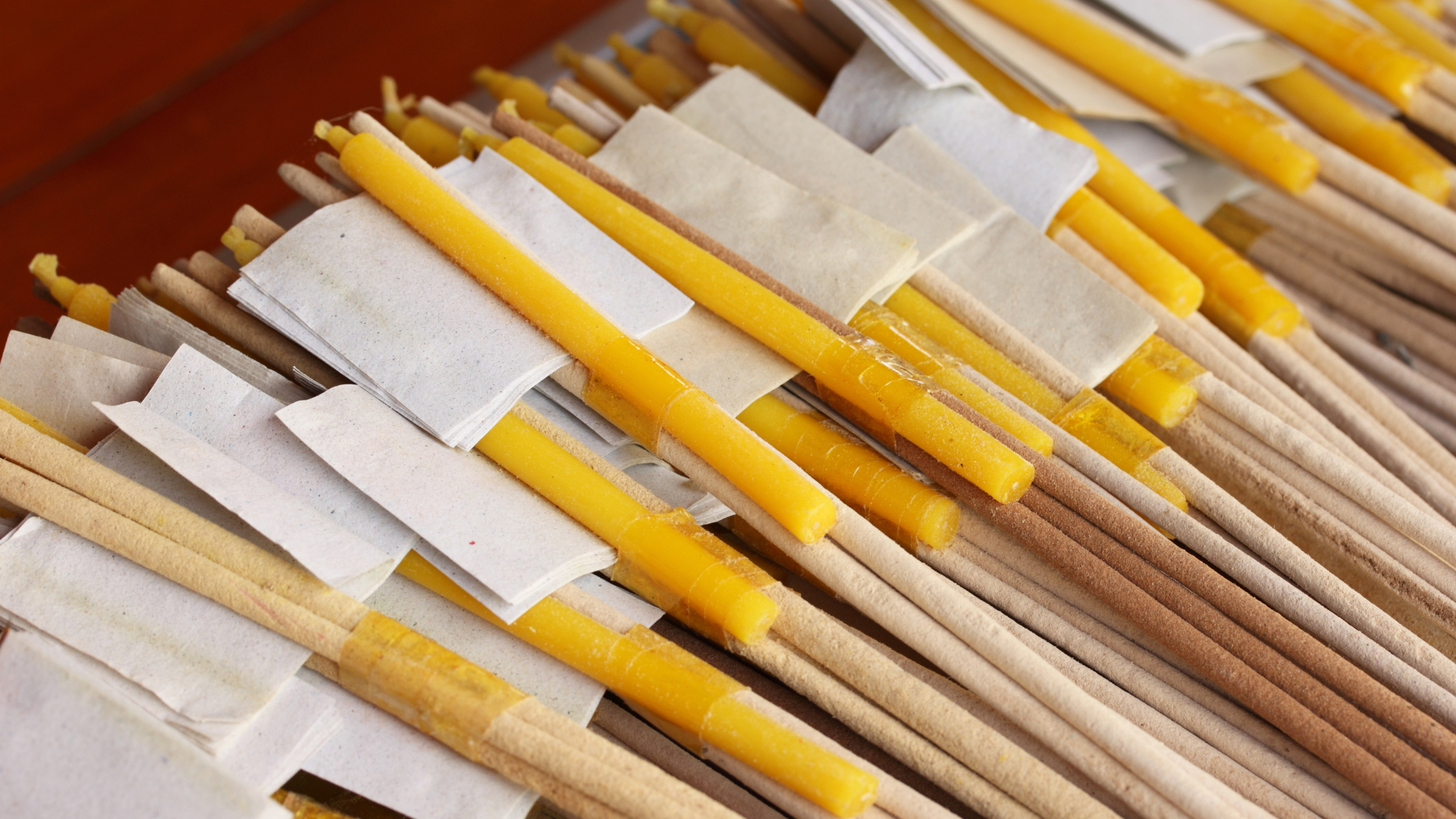
Traditional Nepali incense making is an ancient craft deeply connected to Nepal's Buddhist and Hindu spiritual traditions. For centuries, incense has played an important role in religious ceremonies, daily prayers, meditation, temple offerings, and purification rituals. Its fragrant smoke is traditionally believed to create a peaceful atmosphere, encourage mindfulness, and prepare the surroundings for spiritual practices.
In Nepal, handmade incense is traditionally prepared using a variety of natural aromatic ingredients, including Himalayan herbs, medicinal plants, dried flowers, roots, aromatic wood powders, spices, and natural resins. Depending on the recipe and regional tradition, artisans carefully select and combine these ingredients to create distinctive fragrances associated with different religious and cultural practices.
The traditional process requires patience, knowledge, and craftsmanship. Ingredients are first collected or sourced, cleaned, dried, and ground into fine powders. They are then measured and blended according to traditional recipes before being mixed into a workable paste. Artisans shape the mixture into incense sticks, ropes, or other traditional forms, depending on the method used. The finished incense is then carefully dried to preserve its fragrance and quality.
Unlike many commercially manufactured incense products, traditional handmade incense reflects the personal knowledge and experience of local artisans. Recipes and techniques are often passed down through generations, preserving an important part of Nepal's intangible cultural heritage.
Today, Nepali handmade incense continues to be used in Buddhist monasteries, Hindu temples, households, meditation spaces, and spiritual ceremonies. Beyond its religious significance, it represents a beautiful connection between Himalayan botanical resources, traditional knowledge, and local craftsmanship.